Chambers and Corridors
Within the Labyrinth

An Evolving Journal of Track Studies
Mapping the Labyrinth

Every composition opens a chamber within the labyrinth: a musical interior shaped by its own atmosphere, proportions, pressures, and paths of movement. Some rooms disclose their architecture at once; others reveal hidden corridors only through patient listening, leading toward neighboring works, recurring procedures, and distant regions of the Canterbury/RIO continuum. This evolving journal enters those spaces one track at a time. Each study follows the music closely—through its thresholds and transformations, its moments of density and release—in search of the structural intelligence and gentle eccentricity that animate it from within.

The Journal

Latest Track Studies

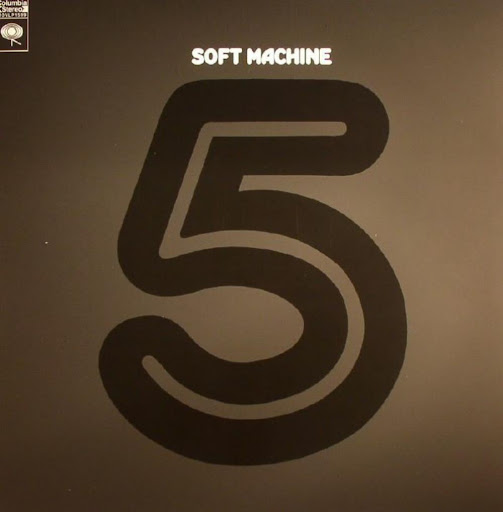
Soft Machine Fifth cover
Soft Machine • 1972

Fifth

“Drop”

A study of how continuity moves away from the sound that most immediately commands attention: isolated transformed impacts become a persistent keyboard field, pulse and low-register weight spread support across the ensemble, the fuzz organ takes the foreground without becoming structurally sovereign, and the return of earlier material begins a closing process of contraction, Functional Attrition, and residual sound.

Enter the Study

Soft Machine Fifth cover
Soft Machine • 1972

Fifth

“All White”

A study of how stable musical information changes what it is able to do: an opening melodic field gives way to shared temporal and harmonic support, that support enables increasingly independent improvisation, and recurrence eventually gathers the ensemble around a common object whose growing consequences lead to closure.

Enter the Study
Soft Machine Fourth cover
Soft Machine • 1971

Fourth

“Kings and Queens”

A study of how a persistent ground can support changing melodic functions: a principal phrase emerges, confirms itself, opens into freer development, returns as recollection, and finally yields its foreground privilege back to the ensemble that sustained it.

Enter the Study
Soft Machine Fourth cover
Soft Machine • 1971

Fourth

“Teeth”

A study of how musical control changes before the surface fully changes with it: fixed material releases freedom, repetition reasserts order, continuity passes between instrumental bearers, and a familiar field gradually loses its authority.

Enter the Study
Soft Machine Fourth cover
Soft Machine • 1971

Fourth

“Virtually”

A study of Functional Mobility across extended form: how recurrent material changes bearer and purpose, melodic authority becomes plural, ensemble resources are progressively withdrawn, and the surviving field contracts toward repetition and cessation.

Enter the Study
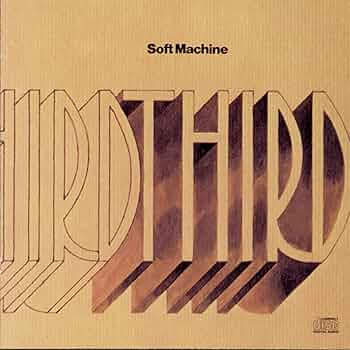
Soft Machine Third cover
Soft Machine • 1970

Third

“Moon in June”

A study of how voice, melody, recurrence, pulse, and harmonic direction separate from their first bearers, pass through self-layering and collective transformation, and persist after language has withdrawn.

Enter the Study
Soft Machine Third cover
Soft Machine • 1970

Third

“Slightly All the Time”

A study of how melodies open into improvisation, pass through rupture and renewal, and return transformed—carrying the warmth, distance, and memory of the journey.

Enter the Study
Return Mapping the Labyrinth ↑ Back to Top